
Skip to content
EDGE Affiliates

Solution · AI & Automation Strategy

AI pilots without a process behind them.

We separate a useful operational use case from a demo. Readiness, data, and the workflow come first. The model comes after those are real.

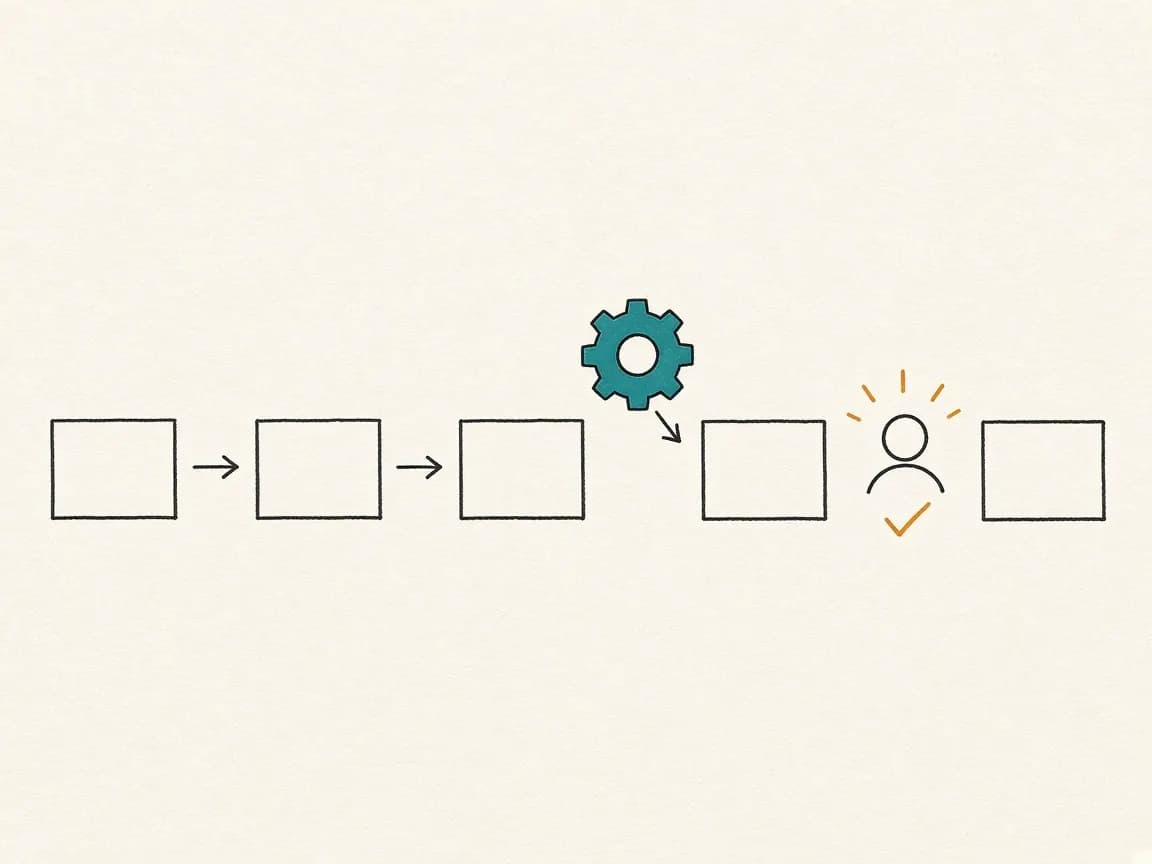
Diagram: a process lane of boxes with a small assist node inserted at one step and a human checkpoint after it.

You'll recognize it when

The signs, in your words.

  • A pilot that impressed the room and is still running in one person's browser tab.
  • Status chased by hand across three tools before every leadership meeting.
  • Pressure from the board to 'do something with AI' and no named workflow attached.
  • Data that lives in enough places that nobody trusts an automated answer yet.

Why it gets expensive

What it costs while it waits.

  1. 01Tool spend grows while the manual work it was meant to remove stays exactly where it was.
  2. 02Teams quietly adopt consumer AI tools with no boundaries, which becomes a governance problem later.
  3. 03Credibility erodes: the next useful automation gets dismissed because the last pilot went nowhere.

How we approach it

The same four steps, applied to this problem.

  1. 01

    Assess

    Find the workflows with real volume and real repetition. Check whether the data and the process are defined enough to automate at all.

  2. 02

    Roadmap

    Pick one or two workflows. Decide what gets automated outright, where an assist belongs, and where a human checkpoint stays.

  3. 03

    Implement

    Automate the collection and routing first. Add the AI assist only where it changes the work, with the boundary written down.

  4. 04

    Enable

    Train the team on the new path, define who owns exceptions, and measure the workflow against the time and errors it used to cost.

What you walk away with.

  • Workflow shortlist with volume, owner, and data readiness
  • Automation design: what runs, what assists, where humans check
  • Working automation on the first workflow
  • Usage boundaries and an owner for exceptions

Platforms involved

AutomationAICustom buildEnablement

Categories, not vendors. Specific platforms are chosen against your workflow.

ScenarioComposite, not a client
Three data sources flowing into one automatically assembled report page

The Monday status report

Situation
An operations lead rebuilds the same report from three tools every week before the leadership meeting.
First move
Automate the collection first. Then decide whether a model should draft the narrative or whether a cleaner workflow is enough.
What changes
The numbers arrive assembled. Monday morning is spent on the decision, not the spreadsheet.
AI & Automation Strategy

Questions we get about this

Do we need to buy an AI platform first?

No. Most first projects start with automation on tools you already run. An AI component is added where it changes the work, not as a prerequisite.

What about data privacy and governance?

Boundaries are part of the design: what data a workflow can touch, where a person reviews output, and who owns exceptions. That is written before anything runs.

Can you build the integration if the platform doesn't cover it?

Yes. Integrations and small internal tools are scoped inside the same engagement when a packaged platform is the wrong shape.

Next step

Tell us about the report you rebuild every week.